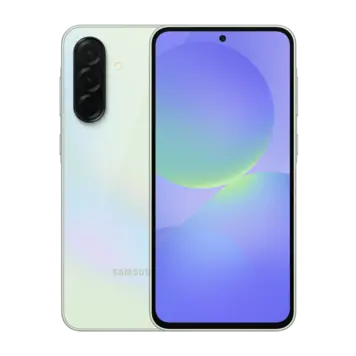
The Samsung Galaxy A36 5G network specifications confirm comprehensive 5G support across Sub-6GHz bands including N1, N3, N5, N7, N8, N20, N28, N38, N40, N41, N66, N77, and N78. Both Standalone (SA) and Non-Standalone (NSA) 5G architectures are supported. Indian carriers Jio, Airtel, and VI operate primarily on N77 and N78 bands, ensuring full compatibility with domestic 5G networks. The Snapdragon 6 Gen 3’s integrated X51 5G modem provides reliable connectivity with power-efficient operation.
4G LTE support spans numerous bands (1, 2, 3, 4, 5, 7, 8, 12, 17, 20, 25, 26, 28, 32, 38, 40, 41, 66) ensuring global roaming compatibility. VoLTE (Voice over LTE) and VoNR (Voice over New Radio for 5G) support enables high-definition voice calls over data networks. All major Indian carriers support these technologies, eliminating the need to fall back to 3G for voice calls.
The SIM configuration allows dual nano-SIM plus dual eSIM slots, supporting up to two active connections simultaneously. Users can maintain separate personal and work numbers or use local and international SIMs while traveling. The eSIM functionality provides flexibility for digital-only carrier plans, though adoption remains limited in India compared to physical SIM cards.
Wi-Fi 6 (802.11ax) support delivers faster speeds and better efficiency compared to older Wi-Fi 5 (802.11ac) standards. According to Wi-Fi Alliance specifications, Wi-Fi 6 provides up to 40% higher speeds in congested environments like apartments or offices. Dual-band operation (2.4GHz and 5GHz) ensures compatibility with all routers while enabling optimal performance on 5GHz networks.
Bluetooth 5.4 represents the latest iteration of wireless technology, offering improved range, speed, and power efficiency over Bluetooth 5.3 or earlier. The Bluetooth SIG specifications show enhanced LE (Low Energy) capabilities beneficial for connected accessories like smartwatches, fitness trackers, and wireless earbuds. A2DP profile support enables high-quality audio streaming to Bluetooth headphones and speakers.
NFC (Near Field Communication) functionality enables contactless payments through Samsung Pay, Google Pay, and other digital wallets. The specifications confirm NFC reader mode support, allowing the device to read NFC tags for automation or information access. This feature increasingly important as India accelerates digital payment adoption.
GPS positioning utilizes five satellite systems: GPS (USA), GLONASS (Russia), Galileo (Europe), BeiDou (China), and QZSS (Japan). This quad-constellation support ensures accurate location tracking even in urban canyons or dense foliage. Navigation apps like Google Maps benefit from faster GPS locks and maintained accuracy.
USB Type-C 2.0 provides 480 Mbps data transfer speeds matching USB 2.0 standards. While slower than USB 3.0/3.1 Gen 1’s 5Gbps or USB 3.2’s 10Gbps, the Type-C 2.0 specification handles typical file transfers adequately. OTG (On-The-Go) support enables connecting USB drives, keyboards, mice, and other peripherals directly to the phone.
Audio capabilities include dual stereo speakers providing immersive sound for media consumption and gaming. The specifications show no Dolby Atmos or Hi-Res Audio certification, suggesting standard audio quality without premium spatial audio processing. The absence of a 3.5mm headphone jack requires USB-C or Bluetooth audio accessories.
The lack of an infrared (IR) blaster prevents using the phone as a universal remote for TVs and air conditioners. This omission, increasingly common in modern smartphones, may disappoint users who prefer consolidated device control. FM radio support is also absent, requiring internet streaming for radio content.