Home Mobile ReviewsLava Agni 3 5G Review 2026: India’s First Dual-Display Phone Worth Buying?

Lava Agni 3 5G Review 2026: India’s First Dual-Display Phone Worth Buying?

7.5 /10 Good Choice

The Lava Agni 3 5G offers innovative dual-display design and clean software experience. The camera quality needs improvement, but the overall package delivers good value for users who want something different from mainstream smartphones.

Processor

MediaTek Dimensity 7300X (4nm process, segment-first for dual-screen phones)

Display

6.78 " Full HD+ (FHD+) AMOLED 120 Hz

Rear Camera

50 MP + 8 MP + 8 MP

Front Camera

16 MP

Battery

5000 mAh (66 W)

OS

Android 14 (Lava UI), upgradeable to Android 15, 16, and 17

RAM

8 GB LPDDR5

Storage

128 GB / 256 GB

Category Ratings

Design & Build 8.0/10
Display Quality 8.0/10
Performance 7.5/10
Camera System 6.5/10
Battery Life 8.0/10
Value for Money 8.0/10

Pros

  • Innovative dual AMOLED display system with rear secondary screen
  • Premium 1.5K curved AMOLED display with 1200 nits peak brightness
  • Segment-leading 66W fast charging (50% in 19 minutes)

Cons

  • No expandable storage limits long-term media storage capacity
  • Missing 3.5mm headphone jack requires wireless earbuds
  • No wireless charging or reverse charging support

Who Should Buy This?

Best For

  • People Who Want Something New and Different
  • Users Who Like Clean and Simple Software
  • People Who Want a Great Display

Not Ideal For

  • People Who Care a Lot About Camera Quality
  • Heavy Mobile Gamers
  • Users Who Need NFC for Payments

Lava Agni 3 5G Prices

Amazon
₹16,998 In Stock
Go To Store
Flipkart
₹18,195 In Stock
Go To Store
Price Disclaimer: Prices are subject to change and may vary from the actual price at the store. We cannot guarantee the accuracy of the prices shown. Please check with the retailer before purchasing.

Introduction

The Lava Agni 3 5G Review shows how an Indian smartphone maker is bringing unique features to the mid-range market. Launched on October 4, 2024, this phone stands out with India’s first dual AMOLED display system. The device now sells for ₹16,999 on Amazon in January 2026, making it an attractive option for buyers seeking something different.

The phone features a 6.78-inch curved main screen and a 1.74-inch rear display powered by the MediaTek Dimensity 7300X processor. The specifications include 66W fast charging that reaches 50% battery in 19 minutes. The device also brings an Action Button similar to iPhones, letting users customize quick functions.

Lava Agni 3 5G Quick Overview

Launch Date: October 4, 2024
Starting Price: ₹16,999 (Amazon, January 2026)
Best For: Users wanting unique dual-screen features
Key Highlight: India’s first smartphone with dual AMOLED displays
Overall Score: 7.5/10 – Good Choice
Quick Verdict: The Lava Agni 3 5G offers innovative dual-display design and clean software experience. The camera quality needs improvement, but the overall package delivers good value for users who want something different from mainstream smartphones.

Lava Agni 3 5G Design & Build Quality

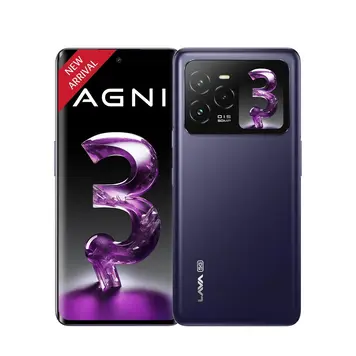
The Lava Agni 3 5G measures 163.7 x 75.5 x 8.8 mm and weighs 212 grams. The size feels comfortable for daily use, though the weight is noticeable during extended holding periods. The dimensions support easy one-handed operation despite the large 6.78-inch display.

The build uses a glass back with matte finish and plastic polycarbonate frame. The glass rear provides a premium look while the matte finish reduces fingerprint smudges. The plastic frame helps keep costs down while maintaining durability for regular use.

The IP64 rating protects against dust and water splashes. This means the phone handles accidental spills and light rain, but you should not submerge it in water. The rating offers peace of mind for everyday accidents without full waterproof protection.

Available colors include Heather Glass and Pristine Glass. Both options feature subtle, elegant styling without flashy gradients. The USB Type-C 2.0 port supports OTG for connecting external drives and accessories.

The standout feature is the dual AMOLED display system. The 1.74-inch rear screen shows notifications, controls music playback, and works as a selfie viewfinder. This makes checking time and alerts convenient without unlocking the main screen. The secondary display is a segment-first feature that sets this phone apart from competitors.

The Action Button, placed next to the volume keys, can be customized for quick functions like camera launch, flashlight, or screenshot. This iPhone-inspired feature adds convenience for frequently-used actions.

Display Specifications and Experience

The display is one of the Lava Agni 3 5G’s strongest features. The 6.78-inch AMOLED panel provides 1200 x 2652 pixel resolution at 429 PPI. This creates sharp text and detailed images suitable for reading and media viewing.

The 120Hz refresh rate delivers smooth scrolling through apps and responsive gaming. The high refresh rate reduces motion blur and makes everyday navigation feel fluid. Users coming from 60Hz displays will notice the improvement immediately.

The display supports 10-bit color depth showing 1 billion colors. This enables accurate gradients and subtle color transitions. HDR10+ support enhances compatible streaming content with better contrast and brightness.

Peak brightness reaches 1200 nits in HDR mode. However, multiple reviews note that outdoor visibility could be better in direct sunlight. The brightness performs adequately but doesn’t match the best displays in this price range.

The 3D dual-curved design creates a premium appearance with curves on both edges. The punch-hole notch maximizes screen space. Corning Gorilla Glass 5 provides scratch protection for everyday use.

Widevine L1 certification enables Full HD streaming from Netflix, Amazon Prime Video, and Disney+ Hotstar. You can enjoy maximum quality streaming without resolution limitations.

The secondary 1.74-inch rear display uses HVGA (336 x 480) resolution. It shows seven preset widgets including camera viewfinder, music player, stopwatch, timer, and notifications. The rear display adds convenience but has limited functionality compared to the main screen.

MediaTek Dimensity 7300X Performance Analysis

The MediaTek Dimensity 7300X chipset uses a 4nm manufacturing process. This processor was designed specifically for dual-screen smartphones, optimizing power management for two displays.

The octa-core setup includes 4x Cortex-A78 performance cores at 2.5 GHz and 4x Cortex-A55 efficiency cores at 2.0 GHz. This balance handles everyday tasks smoothly while managing battery consumption effectively.

Real-world performance reviews show the phone handles daily activities well. Apps open quickly, multitasking works smoothly, and basic operations feel responsive. The phone scored 676,483 on AnTuTu benchmarks, which is respectable for this price range.

The Mali-G615 MC2 GPU supports casual to medium gaming. Popular games like BGMI and Call of Duty Mobile run smoothly at medium settings. However, hardcore gamers playing demanding titles at maximum graphics might want more powerful processors.

The 8GB LPDDR5 RAM enables efficient multitasking across multiple apps. LPDDR5 technology provides faster data transfer than older LPDDR4X, improving app loading and background task management.

Storage comes in 128GB or 256GB using UFS 3.1 technology. This storage type delivers fast app installations, quick file transfers, and rapid game loading. UFS 3.1 performs significantly faster than older UFS 2.2 implementations.

The phone runs Android 14 with Lava’s near-stock interface. The company promises three major OS updates (Android 15, 16, and 17) and four years of security patches. This update commitment is impressive for the mid-range segment.

Camera Specifications and Capabilities

Rear Camera Setup

The camera system is where the Lava Agni 3 5G shows mixed results. The triple camera setup includes a 50MP primary sensor with OIS, 8MP telephoto with 3x optical zoom, and 8MP ultra-wide lens.

The 50MP main camera uses a Sony sensor (1/1.55 inch) with f/1.9 aperture, PDAF, and optical image stabilization. On paper, these specifications look strong for the price range.

Real-world camera performance receives mixed reviews from experts. In good lighting, the camera captures images with accurate colors and decent detail. The white balance works well, and HDR settings help in challenging light conditions.

However, the camera struggles in low light conditions. Images show visible noise, and the camera has focus-hunting issues when multiple subjects appear in the frame. Early units had problems with reddish color tints, but Lava fixed this with software updates.

The 8MP telephoto lens with 3x optical zoom sounds appealing but disappoints in practice. Multiple reviewers noted the telephoto performance falls short of expectations. The lens struggles with detail and sharpness compared to the main sensor.

The 8MP ultra-wide camera with 112-degree field of view handles landscapes and group photos. Like the telephoto, it performs adequately in good light but quality drops quickly in dim conditions.

Front Camera

The 16MP front camera with f/2.0 aperture delivers good selfie quality. Reviews praise the front camera for producing sharp images with accurate color saturation. The camera works well for video calls and social media photos.

The rear display serves as a selfie viewfinder using the main cameras. This clever feature produces better selfies than the front camera, though switching between displays lacks seamless integration.

Photography & Videography Analysis

The camera features include night mode, portrait mode with bokeh, AI scene detection, and pro manual controls. The AI enhancements optimize settings automatically for different scenes.

Video recording supports 4K at 30fps with electronic image stabilization. The OIS helps with stability, but reviewers note it’s not the best performing OIS system. You’ll still see occasional jerks during extreme movements.

The dual-view video mode enables simultaneous front and rear camera recording. Pro video mode provides manual controls over exposure, focus, and white balance settings.

Camera updates have improved performance. Lava released multiple updates addressing focus speed, accuracy, and color reproduction. The November 2024 update enhanced facial tones for front camera photos.

Overall, the camera system works adequately for casual photography. If camera quality is your top priority, competitors like Motorola Edge 50 Neo or Nothing Phone (2a) offer better performance in this price range.

Battery Capacity and Charging Technology

The 5000mAh battery provides full-day usage for most scenarios. Battery life is one of the phone’s strong points according to multiple reviews.

Real-world battery performance varies by usage:

Light Usage (calls, messages, occasional browsing): The phone easily lasts 1.5 to 2 days. One reviewer charged to 100% on Friday and still had battery left after 3.5 hours of weekend use.

Moderate Usage (social media, streaming, photography): Expect comfortable full-day battery life with around 5-6 hours of screen-on time. The phone handles mixed daily activities without midday charging.

Heavy Usage (gaming, 4K recording, maximum brightness): In PCMark battery tests, the phone lasted 12 hours and 8 minutes. This is respectable but competitors like OnePlus Nord CE4 offer better battery endurance for intensive tasks.

The standby time impresses reviewers. The phone conserves power well when not actively used, making it reliable for users who don’t constantly use their phones.

The 66W fast charging is a standout feature. The phone charges from 0 to 50% in approximately 19 minutes and reaches 100% in around 47-48 minutes. This fast charging speed beats most competitors in this price segment.

Important note: The base model (₹20,999 at launch) did not include a charger in the box. The variant with charger cost ₹22,999. Check what’s included when purchasing to avoid surprises.

Power-saving features in Android 14 help optimize battery consumption. Adaptive battery technology learns usage patterns and restricts background activity for rarely-used apps.

The phone does not support wireless charging or reverse charging. Users wanting cable-free charging should consider alternatives with Qi wireless support.

Software, Features & User Experience

The software experience is a major strength of the Lava Agni 3 5G. The phone runs Android 14 with Lava’s near-stock interface, keeping the experience clean and bloatware-free.

The minimal bloatware approach stands out in the Indian market where many phones come loaded with pre-installed apps. You get essential Google apps with few third-party additions. Most pre-loaded apps can be uninstalled if unwanted.

Early software versions had issues. Initial units shipped with build number LAVA_LXX518_SW_U_V10 that showed jitters in animations, micro-lags when scrolling, and a bug where the 120Hz screen operated at 30Hz on the lock screen. These issues frustrated early users.

However, Lava responded quickly with software updates:

  • Update V11 (October 2024): Fixed camera issues including red color tint, improved focus, added 3X zoom button
  • Update V12 (November 2024): Enhanced front camera facial tones, optimized rear camera focus speed and accuracy, added October security patch
  • Update V13 (November 2024): Fixed minor bugs, installed November 2024 security updates

This update frequency shows Lava takes software support seriously. The company promises three major OS updates and four years of security patches.

The software includes useful customization options for themes, icon packs, and always-on display designs. Features like split-screen multitasking, floating windows, and app cloning for dual accounts add functionality.

The RAM lock feature prevents aggressive app killing for priority applications. The gamer booster optimizes performance during gaming sessions. These additions enhance the stock Android experience without adding bloat.

Security options include an in-display optical fingerprint scanner with approximately 0.24-second response time. The 3D face recognition unlocks in about 0.55 seconds. Both biometric options work reliably for quick access.

The customizable Action Button is a unique feature. You can program single-click, double-click, or long-press actions for different functions. Common uses include launching the camera, activating the flashlight, or opening the voice recorder.

The secondary rear display shows notifications, time, music controls, and animated characters when idle. The functionality is limited compared to the main screen, and you cannot seamlessly switch between displays. However, it adds convenience for quick checks without unlocking the phone.

Gemini AI integration provides intelligent features for photo enhancement, smart suggestions, and system optimization based on usage patterns.

Connectivity Options and Special Features

The connectivity options on the Lava Agni 3 5G cover all essential features for 2026 usage.

The 5G support includes both SA (Standalone) and NSA (Non-Standalone) network modes across multiple bands: n1/n2/n3/n5/n7/n8/n20/n28/n38/n40/n41/n66/n77/n78. This extensive coverage ensures compatibility with 5G networks across India and international markets.

The dual SIM slots support 5G+5G dual standby. Both SIM cards can access 5G networks simultaneously with VoLTE and VoNR (Voice over 5G) support. This enables high-quality voice calls over 5G networks where available.

Network support covers 2G GSM, 3G HSDPA, 4G LTE, and 5G. The 4G support includes Bands 1,3,5,7,8,20,28,38,40,41 for compatibility with all Indian network operators.

Wi-Fi 6E (802.11ax) support spans 2.4GHz, 5GHz, and 6GHz bands. Wi-Fi 6E provides faster speeds, lower latency, and less congestion than older Wi-Fi standards. This future-proofs the device for newer routers.

Bluetooth 5.4 offers improved connection stability, extended range, and reduced power consumption for wireless accessories like earbuds and smartwatches.

GPS support includes multiple satellite systems: GPS, A-GPS, GLONASS, GALILEO, BDS (Beidou), NavIC (Indian), and QZSS. This comprehensive coverage improves location accuracy and faster position locks for navigation.

Audio features include dual stereo speakers with Dolby Atmos certification. The stereo setup provides better spatial audio than single speakers. Dolby Atmos enhances supported content with immersive sound effects.

The phone lacks a 3.5mm headphone jack. You’ll need USB-C compatible wired headphones or wireless earbuds. The USB Type-C 2.0 port supports OTG for external storage, keyboards, and game controllers.

NFC is not included, limiting contactless payment options. You cannot use Google Pay tap-to-pay or other NFC-based payment systems. This is a notable omission in 2026.

FM radio functionality is also missing, requiring streaming services for radio content.

The thermal management uses a 5000mm² copper-plated 9-layer vapor chamber cooling system. Reviews indicate the phone manages heat well during gaming and camera use, maintaining performance without excessive throttling.

Who Should Buy Lava Agni 3 5G Review?

Design & Build: 8/10
Display Quality: 8/10
Performance: 7.5/10
Camera System: 6.5/10
Battery Life: 8/10
Value for Money: 8/10

Best For:

1. Innovation Seekers: Users wanting something different from typical smartphones. The dual AMOLED display system and Action Button provide unique functionality unavailable in mainstream devices at this price.

2. Clean Software Enthusiasts: People tired of bloatware and heavy custom skins. The near-stock Android 14 experience with useful additions appeals to users who value clean interfaces and quick updates.

3. Display Quality Prioritizers: Buyers seeking excellent screen quality. The 1.5K curved AMOLED panel with 120Hz refresh rate and HDR10+ support delivers flagship-level visual experiences for the price.

Not Ideal For:

  • Camera Enthusiasts: The camera quality is the phone’s weakest aspect. Multiple reviewers note the cameras underperform compared to competitors like Motorola Edge 50 Neo, Nothing Phone (2a), or Realme P2 Pro.
  • Heavy Mobile Gamers: While adequate for casual gaming, intensive gamers playing demanding titles at maximum settings will find better performance with flagship processors.
  • Users Needing NFC: The missing NFC prevents contactless payments and limits smart accessory pairing. If tap-to-pay is important, consider alternatives with NFC support.

Lava Agni 3 5G Review vs Competition

The Lava Agni 3 5G competes in the crowded ₹15,999-20,999 segment against established players. The phone differentiates itself with unique features but faces tough competition.

Unique Advantages: The dual AMOLED display system remains unavailable in any competing device at this price. The Action Button, clean software, and fast 66W charging also set it apart.

Display Comparison: The 1.5K curved AMOLED screen matches or exceeds most competitors. Few alternatives offer curved displays at this price with similar specifications.

Performance Comparison: The Dimensity 7300X delivers performance comparable to Snapdragon 7-series processors in competing devices. Daily usage feels smooth and responsive across similar devices.

Camera Comparison: This is where competitors gain advantage. Phones like Motorola Edge 50 Fusion, Nothing Phone (2a), and Realme P2 Pro offer better camera performance based on multiple expert reviews. If camera quality matters most, those alternatives perform better.

Battery & Charging: The 5000mAh battery is standard, but the 66W charging beats most competitors. Many alternatives offer 33W or 44W charging, making the Agni 3’s rapid charging a clear advantage.

Software Updates: The three-year OS update promise matches or exceeds competitors from smaller manufacturers. Established brands sometimes offer similar commitments, while budget alternatives typically provide fewer updates.

Price & Value: At ₹16,999 in January 2026, the phone offers strong value for users prioritizing unique features and clean software over camera excellence.

Lava Agni 3 5G Price Analysis

The current pricing makes this phone highly competitive. You get dual AMOLED displays, curved screen, 66W fast charging, and clean software at mid-range pricing.

The features typically appear in phones costing ₹25,000+. The curved AMOLED display, high refresh rate, and fast charging exceed typical offerings at ₹16,999.

The price drop from launch shows market competition in this segment. The lower price makes the phone more attractive despite camera limitations.

Lava Agni 3 5G Review Pros and Cons

Pros:

India’s First Dual AMOLED Display: The 1.74-inch rear screen adds unique functionality for notifications, music controls, and selfie viewfinder. No competing phone offers this feature at any price in India.

Excellent Display Quality: The 6.78-inch curved AMOLED panel with 120Hz refresh rate, HDR10+ support, and 1200 nits peak brightness delivers flagship-level visuals for media consumption and daily use.

Fast 66W Charging: Reaching 50% in 19 minutes and full charge in under 50 minutes beats most competitors. The rapid charging eliminates long waits during busy schedules.

Clean Bloatware-Free Software: The near-stock Android 14 experience with minimal pre-installed apps appeals to users tired of heavy custom skins filled with unnecessary applications.

Strong Update Commitment: Three major OS updates and four years of security patches provide long-term software support uncommon in the mid-range segment. Lava also releases updates quickly based on user feedback.

Innovative Action Button: The customizable button inspired by iPhones adds convenient quick access to frequently-used functions like camera, flashlight, or voice recorder.

Good Battery Life: The 5000mAh battery with excellent standby time provides full-day usage for moderate scenarios. Some users report 1.5-2 days with light use.

Cons:

Average Camera Performance: Multiple expert reviews cite camera quality as the phone’s biggest weakness. Low-light performance, focus issues, and inconsistent results mean photography enthusiasts should look elsewhere.

No Expandable Storage: The missing microSD slot limits long-term storage capacity. You must choose between 128GB or 256GB at purchase with no expansion options.

Missing 3.5mm Headphone Jack: You’ll need USB-C headphones or wireless earbuds. This eliminates compatibility with standard headphones without dongles.

No NFC Support: The missing NFC prevents contactless payments through Google Pay and limits smart accessory pairing in 2026.

No Wireless Charging: The phone lacks wireless or reverse charging capabilities preferred by users with existing Qi accessories.

Limited Rear Display Functionality: While innovative, the secondary display has limited widget options and cannot seamlessly integrate with the main screen for continuous tasks.

Frequently Asked Questions

Is Lava Agni 3 5G Review worth buying in 2026?

The Lava Agni 3 5G offers strong value at ₹16,999 for users prioritizing unique features and clean software over camera excellence. The dual AMOLED displays, excellent main screen, fast charging, and bloatware-free experience justify the price. However, competitors offer better cameras at similar prices. Buy this if you want innovation and clean software; skip it if camera quality matters most.

What is the battery life?

Light users report 1.5-2 days, moderate users get full-day battery with 5-6 hours screen-on time, and heavy users should expect around 12 hours of mixed usage. Standby time is excellent based on multiple reviews.

Does the Lava Agni 3 5G support 5G in India?

Yes, the phone supports 5G across all major Indian operators with SA and NSA modes. Supported bands include n1/n2/n3/n5/n7/n8/n20/n28/n38/n40/n41/n66/n77/n78. Dual SIM 5G+5G capability means both SIM cards can use 5G networks simultaneously with VoLTE and VoNR support.

How good is the camera quality really?

Based on specifications, the camera quality is average to below-average for this price segment. It works adequately in good lighting but struggles in low light with visible noise and focus-hunting issues. Early software had color tint problems, though updates improved performance.

Is the Lava Agni 3 5G good for gaming?

The phone handles casual to medium gaming well. Popular titles like BGMI and Call of Duty Mobile run smoothly at medium settings. AnTuTu score of 676,483 is respectable for this price. However, heavy gamers playing demanding titles at maximum graphics should consider devices with flagship processors for sustained high performance.

Can I expand the storage?

No, the phone does not have a microSD card slot. Storage expansion is not possible. Choose between 128GB or 256GB variants at purchase. The UFS 3.1 storage is fast, but lack of expansion limits options for users with large media libraries.

What comes in the box?

The box includes handset, USB Type-C cable, SIM ejector pin, and protection cover. At launch, the base variant did not include a charger (you paid ₹2,000 extra for the charger variant). Check with retailers about what's included as box contents vary.

Where can I buy at the best price?

Amazon currently offers the best price at ₹16,999 (January 2026), which is ₹1,196 cheaper than Flipkart's ₹18,195. Both retailers show in-stock availability. Some flash sales have shown prices as low as ₹15,999.

How does the secondary display work?

The 1.74-inch rear AMOLED screen shows seven preset widgets: camera viewfinder, music player, stopwatch, timer, notifications, step tracker, and animated characters. It's useful for quick checks without unlocking the main phone. However, you cannot seamlessly switch between displays or use it for continuous tasks. Functionality is limited compared to the main screen.

Will it get Android 15 and beyond?

Yes, Lava promises three major OS updates (Android 15, 16, and 17) and four years of security patches. The company has shown commitment by releasing multiple updates within weeks of launch.

Final Verdict: Should You Buy?

7.5 /10
Good Choice

The Lava Agni 3 5G Review reveals a phone that takes risks with innovative features while making some compromises. The dual AMOLED display system remains unique in the Indian market at any price. The clean software experience and fast charging are genuine strengths.

The phone excels in specific areas: display quality matches flagship phones, the 120Hz AMOLED screen feels premium, and software updates arrive quickly. The Action Button and rear display add useful functionality for daily tasks. Battery life impresses with excellent standby time.

However, the camera system disappoints. Multiple expert reviews agree the cameras underperform compared to competitors like Motorola Edge 50 Neo, Nothing Phone (2a), and Realme P2 Pro. If photography matters, those alternatives offer better results.

Performance handles daily tasks smoothly but won’t satisfy hardcore gamers. The Dimensity 7300X works well for casual gaming and multitasking. Missing features like NFC, 3.5mm jack, and wireless charging may matter to some buyers.

At ₹16,999 in January 2026, the value proposition is strong for the right buyer. You get unique features, clean software, excellent display, and fast charging. The camera compromises and missing features are acceptable trade-offs for users prioritizing innovation and software experience.

Final Score: 7.5/10 – Good Choice

Bottom Line: The Lava Agni 3 5G Review shows an ambitious mid-range phone offering India's first dual-display system, clean software, and flagship-level screen quality. Buy it if you want innovation and bloatware-free experience. Skip it if camera quality tops your priority list.

Disclaimer: Prices and specifications shown may vary from actual products. Please check with the retailer before purchasing.