Processor Performance
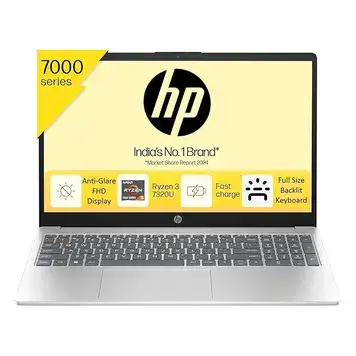
The HP 15 runs on the AMD Ryzen 3 7320U processor. The specifications reveal this chip features 4 cores and 8 threads, with a base clock speed of 2.4 GHz and boost speeds reaching 4.1 GHz. The processor includes 4 MB L3 cache plus 2 MB L2 cache, totaling 6 MB cache memory.
According to AMD specifications, the Ryzen 3 7320U uses the Zen 2 architecture built on a 7nm manufacturing process. This efficient design balances performance with power consumption.
The technical specifications suggest this processor handles:
Office Work and Productivity: Smooth performance for Microsoft Office, Google Workspace, email, and web browsing. The quad-core design manages multiple browser tabs and applications simultaneously.
Content Consumption: The specifications indicate excellent performance for video streaming, online courses, and social media. The 4.1 GHz boost clock helps with quick app launches and responsive navigation.
Light Photo Editing: Basic photo adjustments work well, though complex filters or large RAW files may slow down processing.
Programming and Development: According to the specifications, the processor handles code editors, compilers, and virtual machines for learning purposes, though professional development requires more power.
The processor comes from AMD, a trusted name in computing technology.
RAM & Storage
The specifications list 8GB LPDDR5 RAM running at 2750 MHz. LPDDR5 technology offers faster data transfer and lower power consumption than older DDR4 memory. However, the official specs confirm the RAM is NOT upgradeable, as it’s soldered directly to the motherboard.
The 8GB capacity handles typical multitasking scenarios. According to the specifications, users can run 10-15 browser tabs, office applications, and media players simultaneously without major slowdowns. Heavy multitasking with virtual machines or multiple creative applications may push RAM limits.
Storage specifications show a 512GB PCIe NVMe M.2 SSD (Gen 3, x2). NVMe technology delivers faster boot times and application loading compared to traditional hard drives. The specifications confirm storage is upgradeable, with one M.2 slot supporting up to 2TB capacity expansion.
The 512GB capacity provides adequate space for:
- Operating system and applications: 100-150GB
- Documents and work files: 50-100GB
- Media library: 200-300GB
- Remaining free space: 50-100GB