Home CompareRealme P4 5G vs iQOO Z10 5G: Which to Buy?
Comparison

Realme P4 5G vs iQOO Z10 5G: Which to Buy?

On this page you can compare Realme P4 5G and iQOO Z10 5G side by side. Looking at Realme P4 5G vs iQOO Z10 5G helps you quickly spot the differences in specs and features, so you can decide which one is the better fit for you. The best price currently available for Realme P4 5G is ₹23,985 and for iQOO Z10 5G is ₹22,990. last updated on Feb 23, 2026.
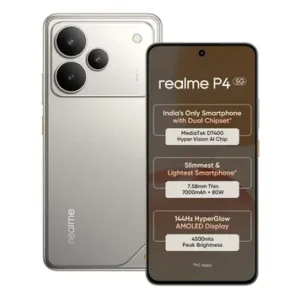
Realme P4 5G
Realme P4 5G ₹23,985 Prices and availability may change on the seller's site View Price
VS
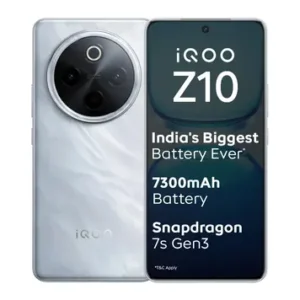
iQOO Z10 5G
iQOO Z10 5G ₹22,990 Prices and availability may change on the seller's site View Price

Realme P4 5G vs iQOO Z10 5G: Which to Buy? Specifications

Specification
Realme P4 5G
Realme P4 5G ₹23,985 Prices and availability may change on the seller's site View Price
iQOO Z10 5G
iQOO Z10 5G ₹22,990 Prices and availability may change on the seller's site View Price
General
In The Box Realme P4 5G unit, USB Type-C cable, 80W power adapter, protective case, SIM ejector needle, quick start guide iQOO Z10 5G smartphone, 90W Flashcharge adapter, USB Type-C cable, protective case, SIM ejector tool, quick start guide, pre-applied protective film, warranty card
Model Name P4 5G (RMX5110) iQOO Z10 5G (PPD1AKU7730P)
Launch Date 20/08/2025 11/04/2025
Colors Steel Gray, Engine Blue, Forge Red Glacier Silver, Stellar Black
Brand Realme iQOO
OTG Support Yes Yes
Display
Display Size 6.77, 17.2 6.77, 17.2
Resolution 1080, 2392 pixels 1080, 2392 pixels
Resolution Type FHD+ (1080 x 2392 pixels) FHD+ (1080 x 2392 pixels, 20:9 aspect ratio)
Refresh Rate 144Hz 120 Hz
Display Type AMOLED (HyperGlow AMOLED), 1B colors, HDR10+ AMOLED with 16.7M colors
Display Design Flat display with single punch-hole cutout Quad-Curved edge design with punch-hole notch
Brightness 1600 nits (HBM), 4500 nits (peak brightness) 5000 nits peak brightness (local), 1300 nits HBM
Screen Protection Gorilla Glass Shield Glass protection with drop-resistant film, twice-strengthened laminated glass, wet-hand touch technology
Body
Dimensions 163.34 x 75.88 x 7.58 mm 163.4 x 76.4 x 7.9 mm
Weight 185g 199 grams
Build Material Glass front, plastic frame, plastic back Plastic back with gradient finish, plastic frame
Ports USB Type-C 2.0, no 3.5mm headphone jack USB Type-C 2.0
IP Rating IP65 & IP66 (dust tight and water resistant to high-pressure water jets) IP65 (splash and dust resistant), MIL-STD-810H certified
Stereo Speakers Yes, dual immersive stereo speakers No stereo speakers
Audio Features Hi-Res Audio Certification, Dual Mics with Noise Cancellation aptX HD, Dual Mics with Noise Cancellation
Processor
Operating System Android 15 with Realme UI 6.0 Android 15 with Funtouch OS 15
Chipset Brand & Model MediaTek Dimensity 7400 Ultra 5G Qualcomm Snapdragon 7s Gen 3 (SM7635)
CPU Type Octa-core (4x2.6 GHz Cortex-A78 & 4x2.0 GHz Cortex-A55) Octa-core (1x Cortex-A720@2.5GHz + 3x Cortex-A720@2.4GHz + 4x Cortex-A520@1.8GHz)
Core Count Octa-core (4x2.6 GHz Cortex-A78 & 4x2.0 GHz Cortex-A55) Octa-core, 2.5 GHz
Clock Speed Up to 2.6 GHz Up to 2.5 GHz
GPU ARM Mali-G615 MC2 Adreno 810 (256 shading units, 1050 MHz)
Camera
Rear Camera Setup Dual rear camera: 50MP (OV50D40) f/1.8 main + 8MP f/2.2 ultra-wide 50MP Sony IMX882 AI main camera + 2MP depth sensor
Front Camera Single 16MP f/2.4 front camera with screen flash 32MP f/2.0 wide-angle selfie camera with screen flash
Flash Type LED flash (rear), screen flash (front) LED flash on rear camera
Zoom Features Digital zoom support Digital zoom available, no optical zoom
Video Recording 4K@30fps, 1080p@30/60/120fps with gyro-EIS Rear: 4K@30fps, 1080p@30/60fps | Front: 1080p@30fps
Battery
Capacity 7000 mAh 7300 mAh
Fast Charging Support 80W Ultra Charge (0-50% in 25 minutes, 0-100% in ~75 minutes) 90W Flashcharge
Wireless Charging No wireless charging support No wireless charging supported
Reverse Charging Yes, 10W reverse wired charging for charging other devices Yes, reverse wired charging supported
Memory & Storage
RAM 6 GB, 8 GB 8 GB, 12 GB
RAM Type LPDDR4X LPDDR4X
Internal Storage 128 GB, 256 GB 128 GB, 256 GB, 512 GB
Expandable Storage No microSD card slot - storage not expandable No microSD card slot, storage not expandable
Memory Card Type Not Supported Not Supported
Storage Type UFS 3.1 UFS 2.2
Network
SIM Configuration Dual Nano-SIM (hybrid slot) Dual Nano-SIM with dual standby
SIM Type Nano SIM Nano SIM
Supported Network Bands 2G: GSM 850/900/1800/1900; 3G: HSDPA 850/900/2100; 4G: 1,3,5,8,28,40,41; 5G: n1,n3,n5,n8,n28B,n40,n41,n77,n78 (SA/NSA) 2G: GSM 850/900/1800/1900 | 3G: HSDPA 800/850/900/2100 | 4G: 1,3,5,8,28,38,40,41 | 5G: n1,n3,n5,n8,n28B,n38,n40,n41,n77,n78
5G/4G/3G Support 5G SA/NSA, 4G LTE, 3G HSDPA, 2G GSM 5G Sub-6, 4G LTE, 3G, 2G GSM
VoLTE/VoNR Dual VoLTE with VoNR support VoLTE (HD Voice) with dual standby, VoNR support for 5G calling
Connectivity
Wi-Fi Wi-Fi 5 (802.11ac) and Wi-Fi 6 (802.11ax) dual-band Wi-Fi 5 (802.11 a/b/g/n/ac), dual-band 2.4GHz & 5GHz
Bluetooth Bluetooth 5.4 with A2DP and LE support Bluetooth 5.2 with A2DP, LE, aptX HD
NFC No Yes
USB Type USB Type-C 2.0 USB Type-C 2.0
GPS/Navigation GPS, GLONASS, Galileo, BeiDou multi-system navigation A-GPS, GLONASS, Galileo, BeiDou, QZSS
Internet Connectivity 5G, 4G LTE, 3G, Wi-Fi hotspot, USB tethering, Bluetooth tethering 5G, 4G LTE, Wi-Fi 5, Dual SIM, Dual Standby
WLAN Hotspot Yes Yes
FM Radio No No
Features
Sensors Fingerprint (in-display optical), accelerometer, gyroscope, proximity, ambient light, color temperature, e-compass, rear infrared In-display optical fingerprint, accelerometer, gyroscope, proximity, e-compass, ambient light, color temperature sensor
Fingerprint Scanner In-display (Optical) In-display (Optical)
Face Unlock AI-powered 2D face recognition AI-powered 2D facial recognition
Special Features IR remote control for AV devices, Hyper Vision AI Chip for visual enhancement, Dual-mic noise cancellation, Dynamic RAM expansion (up to 10GB extra), AI Gaming Coach, Bypass Charging for gaming, AI Editor features IR Blaster for remote control, wet-hand touch technology, AI night portrait, super night mode, 4D game vibration support, MIL-STD-810H military-grade durability certification, Circle to Search with Google
Disclaimer: Specifications shown may be different from the actual product. We cannot guarantee that the information provided on this page is 100% correct. Please check with the retailer before purchasing.

Detailed Review

Quick Verdict

Choose Realme P4 5G if you:
want a smoother 144Hz display for gaming, prefer dual stereo speakers for media, or care about a lighter and slimmer phone that still has a massive battery.
Choose iQOO Z10 5G if you:
want NFC for UPI tap-to-pay, need the slightly larger 7300mAh battery with faster 90W charging, or want a Sony IMX882 main camera with OIS for steadier shots.
🏆
Overall Winner iQOO Z10 5G — it edges ahead with NFC support, optical image stabilisation, a bigger battery, and faster charging, making it the more complete package for most Indian buyers.

Introduction

Picking between the Realme P4 5G and the iQOO Z10 5G is genuinely difficult — and that’s not a bad thing. Both phones are fighting for your attention in the ₹23,000 price range, and both come loaded with features that would have felt premium just a couple of years ago. We’re talking about massive batteries, bright AMOLED displays, and 50MP cameras from two brands that know exactly what Indian buyers want.

But here’s the thing — the Realme P4 5G vs iQOO Z10 5G comparison isn’t as straightforward as picking the one with the bigger number on paper. One has a faster display refresh rate. The other has NFC for UPI tap-to-pay. One charges faster. The other has a Sony sensor with OIS. These differences actually matter in daily life, and that’s exactly what this article breaks down for you.

By the end of this, you’ll know exactly which phone suits your lifestyle — whether you’re a heavy gamer, a content creator, someone who forgets to charge their phone, or just a person who wants the best value for ₹23,000 in 2026.

Design and Build

Looking at both phones side by side, they’re more similar than different — both have plastic backs, plastic frames, and a single punch-hole camera up front. Neither is trying to be a premium flagship, and that’s fine at this price.

The Realme P4 5G is noticeably slimmer at 7.58mm and lighter at 185g. If you’re someone who uses their phone for hours at a stretch, that difference in weight is something you’ll feel by the end of the day. It comes in Steel Gray, Engine Blue, and Forge Red — the Forge Red option in particular looks quite striking. The iQOO Z10 5G, on the other hand, is a bit thicker at 7.9mm and heavier at 199g. Its Glacier Silver finish has a gradient colour-shifting effect that catches light nicely, and the quad-curved display edges give it a more polished look when you’re holding it.

Both phones carry an IP65 rating, so they’ll survive rain or accidental splashes. The iQOO Z10 also has a MIL-STD-810H military-grade certification, which is a nice extra for people who work outdoors or are generally rough with their phones. The Realme P4 gets Gorilla Glass on the front, while the iQOO uses its own Shield Glass with a drop-resistant film pre-applied. For everyday comfort and feel, the Realme P4 wins because it’s simply easier to hold and carry all day. But if you want that slightly more stylish curved-edge look, the iQOO Z10 has an edge there.

Display

Both phones share a 6.77-inch FHD+ AMOLED panel at the same 1080 x 2392 resolution, but the differences are meaningful once you start using them.

The Realme P4 5G runs at 144Hz, which means scrolling through Instagram, swiping between apps, or playing a game like BGMI feels noticeably smoother than on most phones in this range. It hits 4500 nits peak brightness, which is excellent for outdoor visibility on afternoon. The iQOO Z10 5G runs at 120Hz — still smooth, and you likely won’t feel the gap unless you’ve used a 144Hz screen before — but it does hit a higher 5000 nits peak brightness, which is the highest in this price segment right now.

For daily use, both screens look gorgeous. Colours pop, blacks are deep (as expected with AMOLED), and HDR10+ support on the Realme P4 means Netflix and YouTube content looks rich. The iQOO Z10’s quad-curved edges make the display feel more immersive when watching videos. If you’re a gamer or someone who values ultra-smooth scrolling, the Realme P4’s 144Hz display is the better pick. If you use your phone a lot outdoors, the iQOO Z10’s 5000 nits brightness gives it a slight advantage in direct sunlight. Both have Gorilla-class screen protection and in-display fingerprint sensors.

Performance

Under the hood, these two phones take different roads to similar destinations. The Realme P4 5G runs on the MediaTek Dimensity 7400 Ultra, an octa-core chip clocked at up to 2.6GHz paired with the Mali-G615 GPU. The iQOO Z10 5G uses Qualcomm’s Snapdragon 7s Gen 3 with its Adreno 810 GPU, also octa-core and clocked at up to 2.5GHz.

In day-to-day use, both chips handle everything you throw at them — WhatsApp, YouTube, Zomato, a dozen browser tabs, no problem. For gaming, the Dimensity 7400 Ultra in the Realme P4 is backed by a proper thermal management system and even includes Bypass Charging, which powers the phone directly from the charger during gaming to reduce battery heat. Realme has also included an AI Gaming Coach feature. The iQOO Z10 counters with 4D game vibration support and the Adreno 810 GPU, which has historically been strong in graphics-heavy titles.

Both phones run Android 15 — Realme on Realme UI 6.0 and iQOO on Funtouch OS 15. Realme UI tends to be lighter and closer to stock Android in feel. Funtouch OS has improved a lot but still feels slightly more bloated to some users. Storage-wise, the Realme P4 uses faster UFS 3.1 storage, while the iQOO Z10 uses UFS 2.2 — you’ll notice this when transferring files or loading large game assets. For the price, both perform well and won’t frustrate you, but Realme’s chip and storage combo gives it a technical edge in raw performance.

Camera

This is where things get interesting. Both phones have a 50MP main rear camera, but the sensors and supporting lenses are quite different.

The iQOO Z10 5G wins on the main camera with the Sony IMX882 sensor — a 1/1.95-inch sensor that’s genuinely large for this price range. More importantly, it has OIS (Optical Image Stabilisation), which means your photos and videos come out sharper, especially in low light or when you’re shooting handheld. In well-lit conditions, the Z10’s photos are detailed and colour accurate. At night, the Sony sensor combined with Super Night Mode does a solid job, though fine textures can still get smoothed out.

The Realme P4 5G uses an OV50D40 sensor without OIS, relying on Gyro-EIS instead for video stabilisation. It’s a capable shooter in daylight, but the lack of OIS shows when you’re shooting indoors or at a party. Where it pulls ahead is the ultra-wide camera — an 8MP f/2.2 lens with a 112° field of view. The iQOO Z10 has no ultra-wide at all; its second camera is a basic 2MP depth sensor that adds almost no real value.

For selfies, the iQOO Z10 takes a clear lead with its 32MP f/2.0 front camera — sharper, brighter, and better for low-light selfies. The Realme P4 gets a 16MP f/2.4 selfie camera with screen flash, which is decent but not as impressive.

If you shoot a lot of videos or low-light portraits, the iQOO Z10 is the better camera phone. If you like shooting wide-angle landscape shots or group photos, the Realme P4’s ultra-wide gives you more flexibility. Neither phone has a telephoto lens, so zoomed shots on both are just digital zoom.

Battery and Charging

Both phones have massive batteries that’ll last you a full day.

The Realme P4 5G packs a 7000mAh battery, which in real use translates to easily one and a half days for moderate users. Pair that with the 80W Ultra Charge, which tops the phone from zero to full in about ~75 minutes, and you’ve got a battery setup that’s hard to fault. The 80W charger comes included in the box. Realme also supports 10W reverse wired charging, so you can top up earbuds or a friend’s phone in a pinch. The AI Smart Charging feature helps protect battery health over time.

The iQOO Z10 5G goes one step further with a 7300mAh battery — the largest in any phone at this price point — and charges at 90W Flashcharge, which is faster than the P4’s 80W. The charger is also included in the box. Reverse wired charging is supported here too. In real life, you’re looking at two full days of average use on a single charge, which is remarkable. If you travel frequently, travel to areas with unreliable electricity, or just hate charging anxiety, the iQOO Z10’s battery is hard to beat.

Neither phone supports wireless charging, which is understandable at this price. Between the two, the iQOO Z10 wins on both capacity and charging speed.

Connectivity

Both phones support 5G with Indian bands including n28, n40, n41, and n77/n78. So you’ll get strong 5G coverage on both phones regardless of which operator you use.

The biggest connectivity difference between these two is NFC. The iQOO Z10 5G has NFC — the Realme P4 5G does not. This matters because NFC is what allows you to use tap-to-pay at supported UPI terminals and contactless payment systems. It’s not everywhere in India yet, but it’s growing fast in malls, airports, and metro cities. If you’ve ever used this feature, you know how convenient it is.

On Wi-Fi, the Realme P4 supports Wi-Fi 6 while the iQOO Z10 is limited to Wi-Fi 5 — Realme wins here. Bluetooth 5.4 on the P4 is also newer than the Z10’s Bluetooth 5.2. Both have IR blasters for controlling ACs and TVs, which is always useful. Neither has a headphone jack or FM radio. GPS on both phones is solid with multi-system navigation support.

Price and Value

At the time of writing, the Realme P4 5G (8GB + 256GB) is available at around ₹23,999 on Flipkart and Realme’s website, with Amazon listing it at ₹23,985. The 6GB + 128GB base variant starts as low as ₹18,999, making it one of the best 5G phones under ₹20,000 if you don’t need the extra storage.

The iQOO Z10 5G (8GB + 128GB) is priced at ₹22,990 on Flipkart, ₹22,998 on Amazon, and ₹22,999 on iQOO’s own website. The higher RAM and storage variants go up to ₹22,999 for now, with 12GB RAM and 512GB storage options also available. Storage on the iQOO uses UFS 2.2, which is slower than the UFS 3.1 in the Realme P4.

If you’re comparing at similar configurations — 8GB RAM and 256GB storage — the Realme P4 5G is slightly more expensive but gives you UFS 3.1 storage, a 144Hz display, stereo speakers, and Wi-Fi 6. The iQOO Z10 at a similar price gives you NFC, OIS, a Sony camera sensor, a bigger battery, and faster charging. If you’re a buyer looking for the best 5G phone under ₹25,000 with all-around features, the iQOO Z10 edges the value equation because NFC, OIS, and that 7300mAh battery are hard to find together at this price.

Final Verdict

Let’s wrap this up quickly. On display smoothness: Realme P4 wins with 144Hz vs 120Hz. On peak brightness: iQOO Z10 wins with 5000 nits. On performance: Realme P4 has an advantage with faster storage and a newer GPU. On the main camera: iQOO Z10 wins with Sony IMX882 and OIS. On ultra-wide camera: Realme P4 wins — iQOO Z10 has none. On selfie camera: iQOO Z10 wins with 32MP. On battery life: iQOO Z10 wins with 7300mAh. On charging speed: iQOO Z10 wins with 90W. On audio: Realme P4 wins with stereo speakers. On NFC: iQOO Z10 wins.

Here’s the clear recommendation: if gaming and media consumption are your main activities, go with the Realme P4 5G — the 144Hz display, stereo speakers, and Bypass Charging for gaming make it the better entertainment phone. If you want a more well-rounded daily driver — especially if you use UPI tap-to-pay, shoot a lot of photos, or need the maximum battery life possible — the iQOO Z10 5G is the smarter buy.

Coming back to the Realme P4 5G vs iQOO Z10 5G question — for most Indian buyers in 2026, the iQOO Z10 is the safer recommendation. Still confused? Check out the detailed reviews for the Realme P4 5G and iQOO Z10 5G individually to help you decide better.

Frequently Asked Questions

Does the Realme P4 5G have NFC for UPI tap-to-pay?
No, the Realme P4 5G does not have NFC. If you want to use UPI tap-to-pay or contactless payments at supported terminals, you'll need to go with the iQOO Z10 5G, which does have NFC built in.
Which phone has a better camera Realme P4 5G or iQOO Z10 5G?
It depends on what you shoot. The iQOO Z10 5G has a Sony IMX882 sensor with OIS, making it better for low-light photos and steady video. But the Realme P4 5G has an ultra-wide camera that the Z10 completely lacks. For overall camera flexibility, the Realme P4 is more versatile.
Which one has better battery life?
The iQOO Z10 5G has a slightly larger 7300mAh battery compared to Realme P4's 7000mAh, and it also charges faster at 90W versus 80W. Both will easily last a full day, but the Z10 can stretch to two days for moderate users. It's the better battery phone.
Is the Realme P4 5G good for gaming?
Yes, it's quite good for gaming. The 144Hz AMOLED display gives you smoother gameplay, the Dimensity 7400 Ultra handles most titles well, and Bypass Charging means you can game while plugged in without stressing the battery. Realme's dedicated AI Gaming Coach and thermal management add to the experience.
Which phone should I buy if my budget is around ₹23,000?
If NFC, a Sony camera with OIS, and maximum battery life are your priorities, go with the iQOO Z10 5G. If you want a smoother 144Hz display, stereo speakers, faster storage, and Wi-Fi 6, the Realme P4 5G is worth paying slightly more for. Both are excellent choices at this price point.

Similar Mobile Phones to Consider

Alternatives in the same price range
Latest Mobile Phone Reviews

In-depth reviews based on specifications, research, and analysis
Recently Added Comparisons

Latest comparisons added to our collection

Disclaimer: Prices and specifications shown may vary from actual products. Please check with the retailer before purchasing.

Was this helpful?

100% found this helpful

Thank you for your feedback!

User Comments

No comments yet. Be the first to share your thoughts!

Leave a Comment

Your email will not be published. Required fields are marked *