
Lava Agni 4 5G vs Vivo T4 5G
On this page you can compare Lava Agni 4 5G and Vivo T4 5G side by side. Looking at Lava Agni 4 5G vs Vivo T4 5G helps you quickly spot the differences in specs and features, so you can decide which one is the better fit for you. The best price currently available for Lava Agni 4 5G is ₹27,999 and for Vivo T4 5G is ₹24,999 . last updated on Jul 19, 2026.
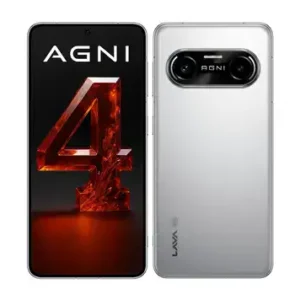
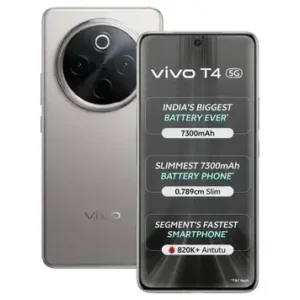
Lava Agni 4 5G vs Vivo T4 5G Specifications
| Specification | ||
|---|---|---|
| General | ||
| In The Box | Lava Agni 4 5G smartphone, 66W fast charger, USB Type-C cable, SIM ejector tool, Clear protective case, Service card | Handset, Quick Start Guide, USB Cable, 90W Charger, Eject Tool, Phone Case, Protective Film, Warranty Card |
| Model Name | Lava Agni 4 5G | Vivo T4 5G |
| Launch Date | 20/11/2025 | 22/04/2025 |
| Colors | Phantom Black, Lunar Mist | Phantom Grey, Emerald Blaze |
| Brand | Lava | Vivo |
| OTG Support | Yes | Yes |
| Display | ||
| Display Size | 6.67, 16.94 | 6.77, 17.19 |
| Resolution | 1220, 2712 pixels | 1080, 2392 pixels |
| Resolution Type | 1.5K+ (1220 x 2712) | FHD+ |
| Refresh Rate | 120Hz | 120 Hz |
| Display Type | AMOLED with 1 billion colors, 10-bit color depth, HDR | AMOLED (Quad-curved) |
| Display Design | Flat Display (No curve) | Quad-Curved edges |
| Brightness | 2400 nits (peak brightness) | Up to 5000 nits (local peak) |
| Screen Protection | Corning Gorilla Glass 5 | Shield Glass |
| Body | ||
| Dimensions | 160.7 x 75.3 x 8.6 mm | 163.4 × 76.4 × 7.89 mm |
| Weight | 208 g | 199 g |
| Build Material | Glass front (Gorilla Glass 5), Aluminum alloy frame, AG glass back | Front: Shield Glass; Back: Composite plastic sheet / Plastic frame |
| Ports | USB Type-C 3.2, No 3.5mm audio jack | USB Type-C |
| IP Rating | IP64 - Dust tight and water resistant to splashes | P65 rated dust & water resistance |
| Stereo Speakers | Yes, Immersive Stereo Speakers | No |
| Audio Features | Spatial Audio | Not Specified |
| Processor | ||
| Operating System | Android 15 | Android 15 with Funtouch OS 15 |
| Chipset Brand & Model | MediaTek Dimensity 8350 (4nm) | Qualcomm Snapdragon 7s Gen 3 (4nm) |
| CPU Type | Octa-core (1x3.35 GHz Cortex-A715 & 3x3.20 GHz Cortex-A715 & 4x2.20 GHz Cortex-A510) | Octa-core |
| Core Count | Octa-core | 1×2.5 GHz Cortex-A720 + 3×2.4 GHz Cortex-A720 + 4×1.8 GHz Cortex-A520 |
| Clock Speed | Up to 3.35 GHz | Up to 2.5 GHz |
| GPU | Mali G615-MC6 | Adreno 710 |
| Camera | ||
| Rear Camera Setup | Dual Camera: 50MP main + 8MP ultra-wide |
50 MP main (Sony IMX882) with OIS, aperture f/1.8 2 MP secondary depth/bokeh sensor f/2.4 |
| Front Camera | 50MP selfie camera with 4K video | 32 MP (aperture f/2.0) |
| Flash Type | Dual-LED flash | Single LED flash (rear) |
| Zoom Features | Digital zoom and optical stabilization via OIS | No dedicated optical zoom beyond OIS; digital zoom only (standard depth/bokeh lens) |
| Video Recording | 4K@30/60fps, 1080p@30fps (rear & front) | 4K @ 30fps supported for both front and rear camera. |
| Battery | ||
| Capacity | 5000 mAh | 7300 mAh |
| Fast Charging Support | 66W wired fast charging | 90 W FlashCharge (wired) |
| Wireless Charging | No wireless charging | Not mentioned |
| Reverse Charging | Not available | Yes |
| Memory & Storage | ||
| RAM | 8 GB | 8 GB, 12 GB |
| RAM Type | LPDDR5X | LPDDR4X |
| Internal Storage | 256 GB | 128 GB, 256 GB |
| Expandable Storage | No microSD card slot - Storage not expandable | Not mentioned |
| Memory Card Type | Not Supported | Not Specified |
| Storage Type | UFS 4.0 | UFS 2.2 |
| Network | ||
| SIM Configuration | Dual Nano-SIM | Dual SIM (Nano + Nano) — dual standby 5G support. |
| SIM Type | Nano SIM | Nano SIM |
| Supported Network Bands | 2G: GSM 850/900/1800/1900 | 3G: HSDPA 850/900/1900/2100 | 4G: 1,3,5,7,8,20,28,38,40,41 | 5G: n1,n2,n3,n5,n7,n8,n20,n28,n38,n40,n41,n66,n77,n78 (SA/NSA) | 5G support including n1/n3/n5/n8/n28B/n38/n40/n41/n77/n78 |
| 5G/4G/3G Support | 2G, 3G, 4G LTE, 5G (14 5G bands) | 5G, 4G LTE, 3G, 2G — with VoLTE support |
| VoLTE/VoNR | VoLTE (Dual 4G VoLTE), VoNR (5G Voice over New Radio) | Supports VoLTE and VoNR for HD calling over 4G & 5G networks. |
| Connectivity | ||
| Wi-Fi | Wi-Fi 6E dual-band | Wi-Fi 6 (Assumed) |
| Bluetooth | Bluetooth 5.4 with A2DP, LE | Version 5.2 |
| NFC | No | Not Specified |
| USB Type | USB Type-C 3.2 | USB Type-C 2.0 |
| GPS/Navigation | GPS, GLONASS, Galileo, BeiDou, QZSS, NavIC | Yes (GPS, GLONASS, BEIDOU etc) |
| Internet Connectivity | 2G, 3G, 4G LTE, 5G, Wi-Fi, Wi-Fi hotspot, USB tethering, Bluetooth tethering | 5G, 4G LTE, 3G, 2G |
| WLAN Hotspot | Yes | Yes |
| FM Radio | Yes | Not Specified |
| Features | ||
| Sensors | Accelerometer, Gyroscope, Proximity sensor, Ambient light sensor, Magnetometer, Compass | Accelerometer, Gyroscope, Proximity, Compass |
| Fingerprint Scanner | In-display (Optical) | In-display (Optical) |
| Face Unlock | Yes, 2D Face Unlock | Yes |
| Special Features | IR Blaster for controlling home appliances, Customizable Action Button (single/double/long press), Vayu AI suite (Math Tutor, English Learning, Wellness Companion, AI Circle to Search, AI Photo Editor, Text to Image generation), 4,300 mm² 3D VC liquid cooling with graphene film |
MIL-STD-810H durability certified Wet-Hand Touch support (touch works when wet/greasy) |
Detailed Review
In This Comparison
Quick Verdict
Introduction
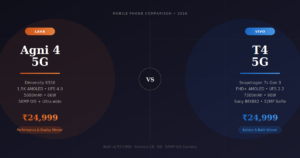 If you’re searching for the best 5G phone under ₹25,000 in 2026, the Lava Agni 4 5G vs Vivo T4 5G comparison is probably one of the toughest calls you’ll have to make right now. Both phones are priced almost identically at around ₹24,999, both run Android 15, and both pack a 50MP main camera with OIS.
The Lava Agni 4 5G puts its money on a sharper 1.5K display, a faster Dimensity 8350 chip, and a large 50MP front camera — making it a strong pick for people who want performance and visuals. The Vivo T4 5G goes all in on battery life with a massive 7300mAh cell, 90W fast charging, a Sony IMX882 main sensor, and a lighter build that’s easy to carry all day.
In this article, we’ll break down every category — display, camera, battery, performance, and value — so you can walk away knowing exactly which phone is right for you.
Design and Build
The Vivo T4 5G feels noticeably lighter and thinner in the hand. At 199g and just 7.89mm thick, it’s the kind of phone you forget is in your pocket. The quad-curved edges on the display give it a premium, comfortable grip, even though the back is made of plastic. It comes in Phantom Grey and Emerald Blaze, and it’s MIL-STD-810H certified — meaning it can handle the bumps and drops of real life. The IP65 rating is also a step above average, protecting it from low-pressure water jets, not just splashes.
The Lava Agni 4 5G, on the other hand, goes for a more premium-looking build. It has a glass back with an anti-glare finish, an aluminum alloy frame, and Gorilla Glass 5 on the front. At 208g and 8.6mm thick, it’s a bit heavier and chunkier — you’ll feel it in your pocket. The IP64 rating covers dust resistance and splash protection, which is decent but slightly behind the Vivo’s IP65. Colors available are Phantom Black and Lunar Mist.
For daily use, if you want something that feels premium and looks like it costs more than it does, the Lava wins on materials. But if you want something light, comfortable, and practically durable, the Vivo T4 5G is the better for daily use.
Display
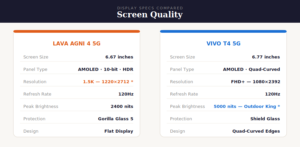 Both phones use AMOLED panels with a 120Hz refresh rate, but there are meaningful differences under the hood. The Lava Agni 4 5G has a 6.67-inch 1.5K display with a resolution of 1220 x 2712 pixels, 10-bit color depth, HDR support, and a peak brightness of 2400 nits. That resolution is noticeably sharper than Full HD — text looks crisper, videos look richer, and photos have more detail.
The Vivo T4 5G has a slightly larger 6.77-inch quad-curved AMOLED display at FHD+ (1080 x 2392) resolution. But what makes it stand out is the brightness — it peaks at 5000 nits locally, which is more than double the Lava. In harsh sunlight outdoors, the Vivo’s screen will be easier to read. The quad-curved design also makes swiping feel smooth and natural.
Performance
This is where the two phones take very different paths. The Lava Agni 4 5G is powered by the MediaTek Dimensity 8350 — a proper mid-range flagship chip built on a 4nm process with cores clocked up to 3.35 GHz. Paired with 8GB LPDDR5X RAM and UFS 4.0 storage, this setup is genuinely fast. UFS 4.0 is the kind of storage you’d find in premium phones — apps load almost instantly, and heavy games don’t stutter.
The Vivo T4 5G runs on the Qualcomm Snapdragon 7s Gen 3, also a 4nm chip but with a more modest clock speed of 2.5 GHz. It comes with LPDDR4X RAM and UFS 2.2 storage — older and slower compared to what the Lava offers. The base variant gives you 8GB RAM and 128GB storage, though a 12GB/256GB option is also available.
Camera
This section has a clear winner for main camera quality, but it’s not as one-sided as you’d think. The Vivo T4 5G uses a Sony IMX882 sensor at 50MP with an f/1.8 aperture and OIS. The Sony IMX882 is a known, well-regarded sensor that delivers natural colors, good dynamic range, and solid low-light performance. It’s paired with a 2MP depth sensor for portrait shots.
The Lava Agni 4 5G also packs a 50MP main camera with OIS, but the sensor is a 1/1.55-inch unit at f/1.9. A larger sensor generally captures more light, which helps in night photography. The Lava also has an 8MP ultra-wide camera — something the Vivo completely lacks. For landscape shots, group photos, or architecture, having an ultra-wide is genuinely useful in everyday photography.
For selfies, the Lava Agni 4 5G has a huge 50MP front camera capable of 4K video — a significant advantage for video creators, influencers, or anyone who does a lot of video calls. The Vivo T4 5G has a 32MP front camera, which is good but not at the same level for 4K selfie video.
Both phones support 4K@30fps on the rear camera. The Lava also supports 4K@60fps on the rear and front — giving you smoother video. For night photography and portraits, the Vivo’s Sony sensor has a slight edge in color accuracy. But for overall camera versatility — ultra-wide, better selfie, and 4K@60fps — the Lava Agni 4 5G wins the comparison.
Battery and Charging
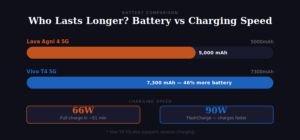 This is the Vivo T4 5G’s strongest card. A 7300mAh battery is enormous for a phone in this price range — it’s larger than what you find in most power banks. In real use, this phone will comfortably last two full days for moderate users. Even heavy users who stream video, play games, and stay on social media all day should get through a full day with plenty left over.
The 90W FlashCharge also means you’re not waiting around. It goes from zero to full noticeably fast. Vivo also includes reverse charging, so you can use the T4 5G to top up another phone or earbuds in a pinch — a feature you won’t find on the Lava. Importantly, the 90W charger comes in the box.
The Lava Agni 4 5G has a standard 5000mAh battery with 66W fast charging — decent, but not remarkable. At 66W, it charges from 0 to 50% in about 19 minutes and fully in around 51 minutes. The 66W charger is included in the box. For a typical Indian work day, the 5000mAh should last you through without needing to charge again. But the Vivo’s battery is simply in a different league.
Connectivity
Both phones support 5G with multiple bands that work across India, and both support VoLTE and VoNR for HD calls over 4G and 5G networks. For most users in India, connectivity is well-covered on either device.
The Lava Agni 4 5G edges ahead with Wi-Fi 6E support (faster than the Vivo’s Wi-Fi 6), Bluetooth 5.4 (vs 5.2 on the Vivo), and a USB Type-C 3.2 port for faster data transfers. The Lava also supports NavIC — India’s own satellite navigation system — along with GPS, GLONASS, Galileo, BeiDou, and QZSS, making navigation more accurate on Indian roads. The Lava also has an IR blaster and FM radio.
The Vivo T4 5G supports GPS, GLONASS, and BeiDou. Both support OTG. The Vivo’s Wet-Hand Touch feature is a nice practical bonus — the screen responds even when your hands are wet.
Price and Value
Both phones are priced around ₹24,999, which puts them squarely in the competitive mid-range 5G segment. But the value equation is different for each.
The Lava Agni 4 5G comes only in one variant — 8GB RAM and 256GB storage. At ₹24,999, you’re getting 256GB of UFS 4.0 storage right out of the box, which is excellent.
The Vivo T4 5G starts at ₹24,999 for the 8GB/128GB variant on Flipkart. A higher 12GB/256GB variant is also available if you need more RAM or storage. The base model has only 128GB with UFS 2.2 storage, which feels underwhelming compared to the Lava. So for the same ₹25,000, the Lava gives you more and faster storage.
Final Verdict
Here’s how each category: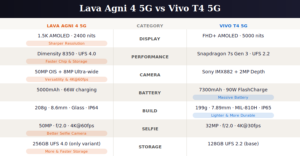
Display goes to Lava Agni 4 5G (sharper 1.5K),
Performance goes to Lava Agni 4 5G (Dimensity 8350 + UFS 4.0),
Camera goes to Lava Agni 4 5G (ultra-wide + better selfie),
Battery goes to Vivo T4 5G (7300mAh + 90W),
Build goes to Vivo T4 5G (lighter + IP65), and
Value on storage goes to Lava Agni 4 5G (256GB).
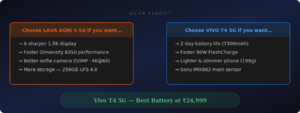
If you’re a heavy user who needs the phone to survive two days without charging, or you travel a lot and don’t always have access to a charger — the Vivo T4 5G is your best bet. Its battery is genuinely class-leading at this price point.
If you game, create content, or care about having a sharp display and more storage out of the box — the Lava Agni 4 5G is the smarter buy. The Dimensity 8350 with UFS 4.0 and the 1.5K AMOLED is a genuinely impressive package for ₹24,999.
For first-time 5G upgraders, casual users, and battery-first buyers: pick the Vivo T4 5G.
For performance-first buyers and content creators: pick the Lava Agni 4 5G.
Before you decide between the Lava Agni 4 5G vs Vivo T4 5G, check the latest prices and it’s price history in specs page.
You May Also Like This
Frequently Asked Questions
Which has a better processor — Lava Agni 4 5G or Vivo T4 5G?
Which phone has better battery life?
Does the Lava Agni 4 5G support NFC for UPI payments?
Which has a better camera for Instagram reels and YouTube Shorts?
Is the Vivo T4 5G worth buying over the Lava Agni 4 5G?
Similar Mobile Phones to Consider
Alternatives in the same price range
Latest Mobile Phone Reviews
In-depth reviews based on specifications, research, and analysis

Oppo Find X9 Pro 5G Review: Best Flagship You Can Buy in India Right Now
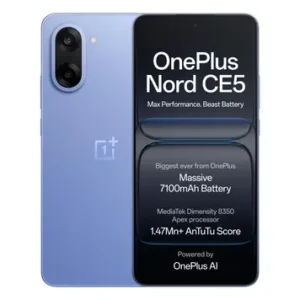
OnePlus Nord CE5 Review: Is India’s Biggest Battery Phone Worth ₹26,999?
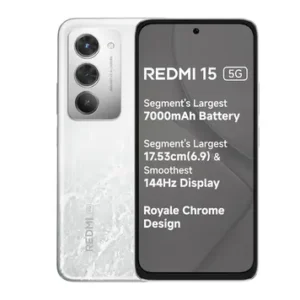
Redmi 15 5G Review: 7000mAh Battery Phone Under ₹16,000
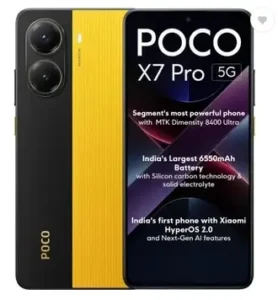
POCO X7 Pro 5G Review: Complete Performance Analysis
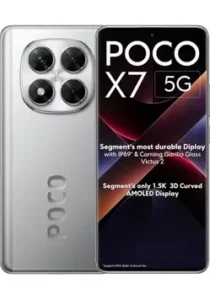
POCO X7 5G Review: Complete Buying Guide & Analysis
Vivo T4X 5G Review: Battery, Performance & Is It Worth Buying?
Samsung Galaxy A17 5G Review 2026: Complete Buyer’s Guide
Oppo K13 5G Review 2026: Complete Battery Powerhouse Analysis
Recently Added Comparisons
Latest comparisons added to our collection
Disclaimer: Prices and specifications shown may vary from actual products. Please check with the retailer before purchasing.
Ready to Decide?
Explore by Brand
Browse all specs and prices from the same brand
Best Mobiles Lists
Curated buying guides to make your decision easier
Was this helpful?
100% found this helpful
Thank you for your feedback!
User Comments
No comments yet. Be the first to share your thoughts!
Leave a Comment