Home Mobile ReviewsApple iPhone 12 Review 2026: Is It Still Worth Buying Today?

Apple iPhone 12 Review 2026: Is It Still Worth Buying Today?

7.5 /10 Good Choice

The iPhone 12 still works well for basic tasks, but shows its age with slow charging and an old display. Good for light users, not for heavy phone users.

Processor

Apple A14 Bionic (5nm process)

Display

6.1 " Full HD+ (FHD+) Super Retina XDR 60 Hz

Rear Camera

12 MP + 12 MP

Front Camera

12 MP

Battery

2815 mAh (20 W)

OS

iOS 14 (upgradeable to latest iOS versions)

RAM

4 GB LPDDR4X

Storage

64 GB / 128 GB / 256 GB

Category Ratings

Design & Build 9.0/10
Display 7.0/10
Performance 8.0/10
Cameras 7.5/10
Battery 6.0/10
Value for Money 7.0/10

Pros

  • Excellent OLED display with HDR support
  • Powerful A14 Bionic chip delivers flagship performance
  • First-in-class Dolby Vision HDR video recording

Cons

  • 60Hz refresh rate feels dated
  • No charger or earphones in box
  • No expandable storage options available

Who Should Buy This?

Best For

  • Want an iPhone but have a tight budget
  • Already own other Apple devices (Mac, iPad, Apple Watch)
  • Take mostly photos for social media (not professional work)
  • Want good video recording capabilities
  • Value long software updates

Not Ideal For

  • Need all-day battery life with heavy use
  • Want the latest and greatest features
  • Play demanding mobile games frequently
  • Need strong telephoto zoom for photos

Apple iPhone 12 Prices

Flipkart
₹54,900 Out of Stock
Go To Store
Amazon
₹54,901 Out of Stock
Go To Store
Price Disclaimer: Prices are subject to change and may vary from the actual price at the store. We cannot guarantee the accuracy of the prices shown. Please check with the retailer before purchasing.

Introduction

The Apple iPhone 12 Review examines a phone that launched in October 2020 and brought major changes to Apple’s lineup. It introduced 5G networks, a new flat-edge design, and became the first phone ever to record Dolby Vision HDR video. Now, more than five years later, is it still a good buy?

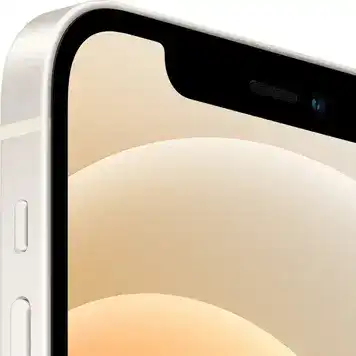
Currently priced at ₹49,900 on Flipkart (though out of stock), the iPhone 12 features a 6.1-inch OLED screen, dual 12MP cameras, and Apple’s A14 Bionic chip. The phone has an aluminum frame with glass on both sides and can survive being underwater for 30 minutes.

This Apple iPhone 12 Review looks at the 128GB model. We’ll help you decide if this older iPhone makes sense in 2026, or if you should spend your money on something newer. Check our detailed iPhone 12 specs page for all technical information, or use our Gadget Finder to compare with other phones in this price range.

Quick Overview

Launch Date: October 23, 2020
Current Price: ₹49,900 (Flipkart) | ₹54,900 (Amazon)
Best For: Apple users on a budget, casual photographers
Standout Feature: First phone with Dolby Vision video recording
Overall Score: 7.5/10 – Decent Value
Quick Take: The iPhone 12 still works well for basic tasks, but shows its age with slow charging and an old display. Good for light users, not for heavy phone users.

Design and Build Quality

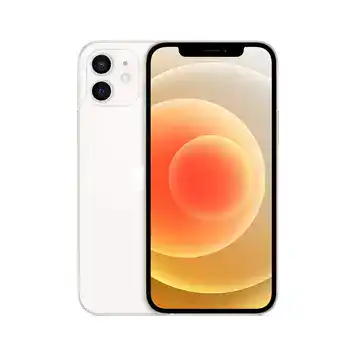
The iPhone 12 measures 146.7mm tall, 71.5mm wide, and just 7.4mm thin. At 162 grams, it feels light in your hand. The flat sides remind many people of the classic iPhone 5 design from 2012.

Apple used aerospace-grade aluminum for the frame. The back is glass to allow wireless charging. The front has Ceramic Shield protection, which Apple says is 4 times stronger than regular phone glass.

The phone can handle water. It has an IP68 rating, meaning it survives in 6 meters of water for 30 minutes. This protects against spills and rain, but you shouldn’t take it swimming regularly.

You can buy it in six colors: Black, White, Red, Green, Blue, and Purple. Each color has a matching aluminum frame that looks premium.

The phone charges through a Lightning port at the bottom. There are two speakers – one at the bottom and one at the top. This creates stereo sound for videos and music.

Bottom Line: The build quality is excellent. The phone feels solid and premium. The flat edges make it easier to grip than rounded phones.

Screen Quality

The iPhone 12 has a 6.1-inch OLED screen. The resolution is 2532 x 1170 pixels, giving you very sharp text and images. The screen shows true black colors because OLED pixels turn completely off.

The display gets bright enough for outdoor use. Normal brightness reaches 625 nits, and it can hit 1200 nits when showing HDR videos. You can see the screen clearly even in direct sunlight.

Here’s the biggest weakness in 2026: The screen only refreshes at 60Hz. Most phones today have 90Hz or 120Hz screens that look smoother when scrolling. On the iPhone 12, scrolling through apps doesn’t feel as fluid.

The screen supports HDR10 and Dolby Vision content. This makes movies from Netflix and Apple TV+ look great with better colors and contrast. The notch at the top holds the Face ID sensors but takes up screen space.

True Tone technology adjusts the screen’s color temperature based on lighting. This makes the screen easier on your eyes in different environments.

Reality check: The screen looks great for photos and videos. But in 2026, the 60Hz refresh rate feels slow compared to newer phones. If you use a friend’s phone with a 120Hz screen, you’ll notice the difference immediately.

Speed and Performance

The iPhone 12 runs on Apple’s A14 Bionic chip. This processor was cutting-edge in 2020 and still performs well today. It has 6 cores: 2 fast cores running at 3.1 GHz and 4 efficient cores at 1.8 GHz.

The phone has 4GB of RAM. On paper, this seems small – many Android phones have 8GB or 12GB. But iPhones use memory more efficiently, so 4GB works fine for most tasks.

What this means for daily use:

  • Apps open quickly
  • You can switch between multiple apps without slowdown
  • Games like BGMI and Call of Duty Mobile run smoothly at high settings
  • Photo editing apps work without lag
  • The phone doesn’t overheat during normal use

The 128GB storage is fast NVMe type. This makes transferring files and loading apps quicker than older phone storage types.

The reality in 2026: The A14 Bionic still handles everything you throw at it. It’s faster than most mid-range Android phones sold today. However, very demanding games might not run at maximum settings, and the phone will feel slower compared to the iPhone 15 or 16. Learn about Apple A14 Bionic

Camera System

Main Cameras

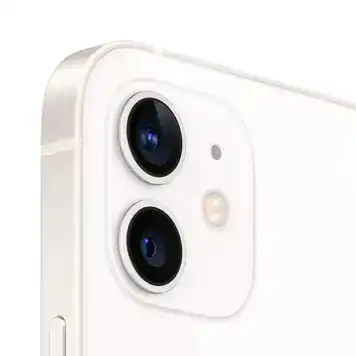
The iPhone 12 has two cameras on the back. The main camera uses a 12MP sensor with an f/1.6 lens opening. This lets in more light than older iPhones. The lens has optical image stabilization (OIS) to reduce blur from shaky hands.

The second camera is an ultra-wide 12MP sensor with an f/2.4 lens. It captures 120-degree wide shots, perfect for landscapes or group photos.

Both cameras take good photos in daylight. Colors look natural, not oversaturated. The Night mode works on both cameras for better low-light photos. Smart HDR 3 balances bright and dark areas automatically.

Photo quality in 2026: The cameras still take very good photos. They’re better than budget phones but not as good as the latest flagship phones. You won’t get a telephoto zoom lens, so zooming in reduces quality.

Video Recording

This is where the iPhone 12 shines. It can record:

  • Regular 4K video at 24fps, 30fps, or 60fps
  • Dolby Vision HDR video at 4K 30fps (not 60fps – that’s only on the Pro models)
  • 1080p slow-motion at 120fps or 240fps

The Dolby Vision feature was revolutionary. The iPhone 12 processes HDR video in real-time while recording. You can edit these videos right on the phone. No other phone could do this when it launched.

Important note: The regular iPhone 12 records Dolby Vision at 4K 30fps maximum. Only the iPhone 12 Pro and Pro Max support 4K 60fps Dolby Vision.

Front Camera

The selfie camera is 12MP with an f/2.2 lens. It supports Night mode, which was new at the time. You can record 4K video at 60fps from the front camera – great for vloggers.

Bottom line: The cameras are good, not great. They work well for social media, family photos, and casual videos. Serious photographers will want a newer phone with better zoom and low-light performance.

Battery and Charging

The iPhone 12 has a 2815mAh battery. This is small by 2026 standards – most Android phones have 4000-5000mAh batteries.

Real-world battery life in 2026:

  • Light use (calls, texts, some browsing): Full day with 20-30% left
  • Moderate use (social media, photos, streaming): You’ll need to charge by evening
  • Heavy use (gaming, videos, navigation): 6-8 hours before dying

Testing shows the iPhone 12 lasts about 8-10 hours of active screen time. This varies based on what you do. Gaming drains it fast. Reading drains it slowly.

Charging speeds:

  • The phone supports 20W wired fast charging
  • From dead to 50% takes about 30 minutes
  • Full charge takes about 2 hours with a 20W charger

Important: The box doesn’t include a charging brick. You only get a USB-C to Lightning cable. You’ll need to buy a 20W charger separately (costs about ₹1,900).

Wireless charging:

  • MagSafe charging at 15W (needs MagSafe charger)
  • Regular wireless charging at 7.5W (any Qi charger)
  • MagSafe uses magnets to align perfectly

The small battery is the iPhone 12’s biggest weakness in 2026. If you’re used to phones that last 2 days, this will disappoint you. You’ll probably need to charge it every night, and heavy users might need a midday top-up.

Software and Updates

The iPhone 12 launched with iOS 14 in 2020. As of January 2026, it can update to the latest iOS version. This is a huge advantage over Android phones.

Why this matters:

  • You get new features for free
  • Security updates protect your data
  • The phone stays fast and stable
  • Apps continue working properly

Most Android phones only get 2-3 years of updates. The iPhone 12 will likely receive iOS updates until at least 2027, giving you 7+ years of support.

Security features:

  • Face ID unlocks the phone using facial recognition
  • Works in darkness using infrared sensors
  • Adapts to appearance changes (haircuts, glasses, masks)
  • No fingerprint sensor available

Special features:

  • MagSafe: Magnetic accessories snap to the back
  • Dolby Atmos: Better spatial audio
  • Emergency SOS: Quick access to emergency services
  • Ceramic Shield: Tougher front glass

The interface is clean with no bloatware. You get about 118GB of usable space from the 128GB storage (the system uses the rest).

The big advantage: Long software support means this 5-year-old phone still gets the latest features. Android phones from 2020 are mostly stuck on old software now.

Connectivity and Features

5G Support: The iPhone 12 works with India’s 5G networks. It supports many 5G bands including those used by Jio, Airtel, and Vi. When 5G isn’t available, it falls back to 4G.

SIM Cards: It has dual SIM support using one physical Nano-SIM and one eSIM. This lets you use two phone numbers on one device.

WiFi: Supports WiFi 6 (the latest standard in 2020). This gives you faster speeds and better performance on crowded networks. It works with older WiFi networks too.

Bluetooth: Version 5.0 for wireless headphones, speakers, and car connections. The connection is stable and has good range.

NFC: Enables Apple Pay for contactless payments. Tap your phone at payment terminals instead of using cards.

GPS: Works with multiple satellite systems (GPS, GLONASS, Galileo, QZSS) for accurate location tracking worldwide.

Audio:

  • Two stereo speakers with Dolby Atmos
  • No headphone jack (you need wireless headphones or a Lightning adapter)
  • Two microphones with noise cancellation for clear calls

What’s missing:

  • No FM radio
  • No microSD card slot for storage expansion
  • No reverse wireless charging

Reality check: The iPhone 12 has all the connectivity features you need in 2026. The 5G support means it’s ready for faster networks as they expand across India.

Who Should Buy the iPhone 12?

Category Ratings:

Design & Build: 9/10 – Premium materials, water resistance, looks great
Display: 7/10 – Good OLED quality but stuck at 60Hz
Performance: 8/10 – Still fast enough for most people
Cameras: 7.5/10 – Good photos, excellent video, but lacking zoom
Battery: 6/10 – Weakest point, needs daily charging
Value for Money: 7/10 – Reasonable at discounted prices

Buy this phone if you:

  • Want an iPhone but have a tight budget
  • Already own other Apple devices (Mac, iPad, Apple Watch)
  • Take mostly photos for social media (not professional work)
  • Use your phone lightly to moderately
  • Value long software updates
  • Want good video recording capabilities

Skip this phone if you:

  • Need all-day battery life with heavy use
  • Want the smoothest possible screen (120Hz)
  • Play demanding mobile games frequently
  • Need strong telephoto zoom for photos
  • Want the latest and greatest features
  • Use your phone intensively for work

Better alternatives to consider:

  • iPhone 13: Better battery, brighter screen, improved cameras (if you can spend ₹10,000 more)
  • iPhone SE (2022): Cheaper Apple option with newer chip (if you want smaller size)
  • Android flagships: Better specs on paper at similar or lower prices (if you’re okay leaving Apple ecosystem)

How It Compares to Competition

In the ₹45,000-₹55,000 price range today, you have many options. Here’s an honest comparison:

What the iPhone 12 does better:

  • Gets software updates for 7+ years (Android phones get 2-4 years)
  • Better video recording quality, especially with Dolby Vision
  • Smoother overall experience despite lower specs on paper
  • Better resale value if you sell it later
  • Works seamlessly with other Apple devices
  • More secure with regular updates

Where competitors beat the iPhone 12:

  • Screens: Most Android phones now have 90Hz or 120Hz displays that feel smoother
  • Battery: Android flagships often have 4500-5000mAh batteries (vs 2815mAh)
  • Charging: Some Android phones charge at 65W or faster (vs 20W)
  • RAM: Android phones offer 8-12GB RAM (vs 4GB)
  • Cameras: Newer phones have better zoom, night mode, and megapixels
  • Price: You get more features for less money with Android
  • Storage: Many Android phones have microSD card slots

The honest truth: On paper, Android phones offer better specs. In real use, the iPhone 12 still feels smooth and responsive thanks to iOS optimization. The main question is whether you value the Apple ecosystem and long-term updates, or prefer cutting-edge hardware at a better price.

In 2026, the iPhone 12 is showing its age. The 60Hz screen and small battery are noticeable downsides. If you’re buying new today, consider spending a bit more for the iPhone 13 or 14, which fix these issues.

Price Analysis

Price History: The iPhone 12 launched at ₹79,900 in October 2020. It’s come down significantly. The lowest price we’ve seen is ₹35,999, and the highest was ₹60,999.

Is ₹49,900 a good price?

Pros of this price:

  • Much cheaper than ₹79,900 launch price
  • Gets you into Apple ecosystem affordably
  • Still receives latest iOS updates
  • Good for light to moderate users

Cons of this price:

  • iPhone 13 sells for ₹59,900 with better battery and screen
  • iPhone SE (2022) available for ₹43,900 with newer chip
  • 5-year-old phone with 5-year-old battery
  • No charger included (add ₹1,900)
  • May need accessories (add ₹2,500-₹4,000)

Hidden costs to consider:

  • 20W USB-C charger: ₹1,900
  • Screen protector: ₹500-₹1,000
  • Phone case: ₹1,000-₹2,500
  • Total: ₹53,400-₹59,300 all-in

Our take: At ₹49,900, the iPhone 12 is decent value only if you specifically want an iPhone on a budget. For ₹10,000 more, the iPhone 13 offers significantly better battery life and a brighter screen. For ₹6,000 less, the iPhone SE (2022) has a newer chip but smaller screen.

Check real-time prices with price history here Apple iPhone 12

Good Points and Bad Points

What’s Good:

Premium build quality – The aluminum frame and Ceramic Shield glass feel expensive. IP68 water resistance means it survives spills and rain. At 162 grams, it’s lighter than many modern phones.

Excellent OLED screen – The display shows true blacks and vibrant colors. The 1200 nits peak brightness works great outdoors. HDR content looks stunning on this screen.

Strong performance – The A14 Bionic chip still handles daily tasks smoothly. Apps open fast, multitasking works well, and games run without major issues. It feels faster than many 2026 budget phones.

Industry-leading video recording – The Dolby Vision HDR video at 4K 30fps was revolutionary and still impresses. You can edit these videos directly on the phone. Great for content creators and videographers.

Long software support – Getting iOS updates for 7+ years is a huge advantage. Your phone stays secure and gets new features long after Android competitors stop updating.

5G ready for the future – Full 5G band support works with Indian carriers. As 5G expands, this phone is ready.

MagSafe ecosystem – Magnetic charging and accessories snap on perfectly. Makes wireless charging more reliable and opens up accessory options.

What’s Not Good:

Old 60Hz display – This is very noticeable in 2026. Scrolling feels choppy compared to 90Hz or 120Hz phones. Once you use a high refresh rate screen, going back is hard.

Poor battery life – The 2815mAh battery barely lasts a day with moderate use. Heavy users need to charge midday. This is the phone’s biggest problem in 2026.

No charging brick included – You only get a cable in the box. The required 20W charger costs ₹1,900 extra. This feels cheap for a premium phone.

Cannot expand storage – No microSD card slot means you’re stuck with 64GB, 128GB, or 256GB. If you chose too little storage, you can’t upgrade later.

Slow charging speed – The 20W charging feels slow in 2026 when some phones charge at 65W or faster. Full charge takes about 2 hours.

Limited RAM – The 4GB RAM is adequate but not generous. iOS manages it well, but heavy multitasking can slow things down.

No telephoto camera – You can’t zoom in without losing quality. The ultra-wide camera is useful, but the lack of optical zoom is limiting for photos.
Frequently Asked Questions

Is the iPhone 12 worth buying in 2026?

The iPhone 12 makes sense only in specific situations. If you want an affordable iPhone and use your phone lightly, it's okay. But the small battery and 60Hz screen are real problems in 2026. The iPhone 13 is a better buy if you can spend ₹10,000 more - you get better battery life and a brighter screen. For most people, we'd recommend either saving up for a newer iPhone or considering a newer Android phone with better specs.

How long does the battery actually last?

Real-world testing shows the iPhone 12 lasts 8-10 hours of screen time. Light users (calls, texts, some browsing) get through a full day. Moderate users (social media, streaming) need to charge by evening. Heavy users (gaming, videos) might only get 6-7 hours. Remember, this is a 5-year-old phone - if buying used, the battery has probably degraded and won't even hit these numbers. Check the battery health before buying a used one.

Does it work with 5G in India?

Yes, the iPhone 12 supports India's 5G bands including those used by Jio, Airtel, and Vi. It works with both sub-6GHz 5G (which is what we're getting in India) and also has 4G LTE for areas without 5G. The 5G support is one reason this phone still makes some sense in 2026 - it's ready for the future.

How good are the cameras in 2026?

The cameras take good photos that look fine on social media. They're better than budget phones but not as good as current flagship phones. In good lighting, photos look great with natural colors. Night mode helps in low light but isn't as good as newer phones. The big weakness is no telephoto zoom - you can only zoom digitally, which reduces quality. For casual photography, it's fine. For serious photographers, look at newer phones.

Can you play games on this phone?

Yes, the A14 Bionic chip handles most games well. Popular games like BGMI, Call of Duty Mobile, and Genshin Impact run at high settings. However, the 60Hz screen doesn't look as smooth as gaming phones with 90Hz or 120Hz displays. The battery drains very fast during gaming - expect only 3-4 hours of intensive gaming. For casual gaming, it's fine. For serious gamers, get a phone with a bigger battery and faster screen.

Can you add more storage later?

No, there's no microSD card slot. You must choose 64GB, 128GB, or 256GB when buying, and you're stuck with that forever. The 128GB option is the sweet spot for most people. If you take lots of photos and videos, consider 256GB. You can use iCloud to store files online, but this requires a monthly subscription.

What warranty do you get?

Apple provides 1 year of warranty covering manufacturing defects. The warranty doesn't cover accidental damage like drops or water damage (even though the phone is water-resistant). You can buy AppleCare+ for extended coverage, but it costs extra. Check if the seller offers any additional warranty when buying.

Where can you buy it at the best price?

As of January 2026, both Flipkart (₹49,900) and Amazon (₹54,900) show out of stock for new units. Since Apple discontinued the iPhone 12 in 2023, you'll mainly find it from third-party sellers or in the used market. Be careful buying used - check the battery health, look for physical damage, and make sure it's not stolen. Our price tracker shows the best current deals across retailers.

Does the box include a charger?

No, the box only contains the iPhone 12, a USB-C to Lightning cable, and documentation with a SIM ejector tool. You need to buy a 20W USB-C charger separately (costs about ₹1,900). You also need a phone case and screen protector. Budget at least ₹3,500 extra for these essential accessories.

How does the screen compare to newer phones?

The OLED screen quality is excellent with great colors, true blacks, and good brightness. The problem is the 60Hz refresh rate. Most phones in 2026 have 90Hz or 120Hz screens that look much smoother when scrolling and gaming. If you've only used 60Hz screens, you won't notice. But if you've tried a high refresh rate screen, going back to 60Hz feels noticeably choppy. This is the second-biggest weakness after battery life.

Final Verdict: Should You Buy?

7.5 /10
Good Choice

Summary

This Apple iPhone 12 Review reveals a phone that was excellent in 2020 but shows its age in 2026. The A14 Bionic chip still delivers good performance. The Dolby Vision video recording remains impressive. The build quality and design hold up well.

The problems are equally clear. The 2815mAh battery struggles to last a full day with moderate use. The 60Hz screen feels outdated when most phones offer 90Hz or 120Hz. The lack of a charging brick means extra costs. The cameras are good but lack the zoom and night mode capabilities of newer phones.

The iPhone 12’s biggest strength is software updates. It’ll likely receive iOS updates through 2027, giving you 7+ years of support. No Android phone from 2020 can match this longevity.

Final Score: 7.5/10 – Decent Value

Bottom Line: The iPhone 12 is an okay buy only in specific situations. It makes sense if you want an iPhone on a tight budget, use your phone lightly, and value long software support. For everyone else, spending ₹10,000 more for the iPhone 13 (better battery, brighter screen) or looking at newer Android phones makes more sense. The 60Hz screen and small battery are significant compromises in 2026. If you prioritize cutting-edge features, better battery life, and smoother displays, explore our collection of 2024-2025 flagship phones under ₹60,000. You'll find better value with newer technology.

Disclaimer: Prices and specifications shown may vary from actual products. Please check with the retailer before purchasing.